All Categories
Featured
Minimizing Ad Acquisition Costs Today
Table of Contents
While carrying out an usability test, among the guinea pig described after performing such a search and discovering that it was not linked to his classification: "When I browse when I remain in a category then to me it seems logical to browse within that category." As soon as we value this user context, it's easy to comprehend how users make this conclusion.
This is particularly important on mobile, when people are handling smaller screens and often wish to see a smaller sized subset of product choices. Mobile users ought to have the ability to pay in a streamlined method. During our use screening of mobile checkouts, we have actually observed that Payment Method choice is a step where users frequently experience functionality problems.
All of those choices can be challenging to stabilize on a small screen, causing users ending up being overwhelmed and baffled. Check out Baymard's annotated examples that emphasize what 92 companies are doing right and incorrect with their mobile payment alternatives, and discover tips on improving your mobile experience to get more conversions.
2026 Google Ads Tactics to Drive Better CPA
It's clearly noticeable and separated from the rest of the fields, however remains collapsed to reduce the focus and lower abandonment. Our eye-tracking test sessions validate that empty kind fields draw a disproportionate amount of user attention, and advertising fields, like "Coupon Code," will get observed right away if shown by default within the regular circulation of kind fields.
When users observe the discount coupon field, they will often feel like they are overpaying. As one subject mentioned: "I discover it slightly frustrating that they're flashing these coupon code fields as much as they do, because it is like, 'You should have a voucher, you might get this more affordable if you knew this code' I do not." To resolve this, collapse all voucher and advertising fields behind links, and place those links secondary to the action's main function (e.g., listed below the charge card kind).
Make sure misspelled queries do not cause use problems that trigger users to abandon the website. The goal of conversion rate optimization is to improve the results you're getting from your current site traffic. With a solid ecommerce CRO strategy, you can increase the number of conversions you get, whether you're looking for more clicks, sign-ups, or sales.
Making incremental modifications can lead to a considerable revenue boost. Find out more about the UX design process. If you want to enhance conversion rate, then it needs to be tracked! To track an ecommerce site's conversion rate, you can utilize a variety of analytics tools. While Google Analytics is the most popular option for website-specific data, there are many alternative approaches for measuring this essential metric.
Preparing US Search Marketing to 2026 Standards
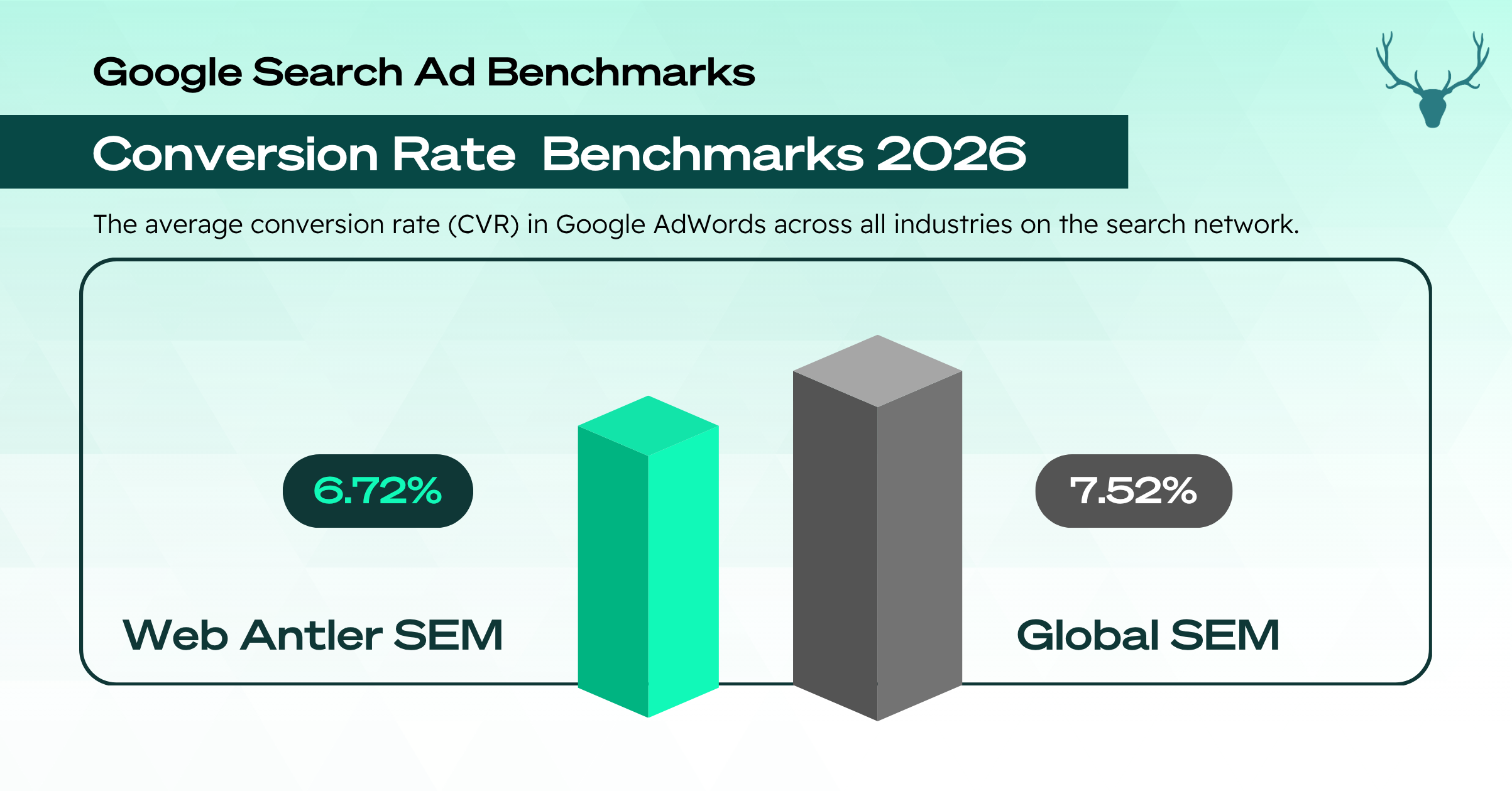
a month or a year), divide the total number of purchases made throughout that period by the total number of visitors to your website. Several manageable aspects can affect conversion rates, such as the style of your web pages, the quality of your site material, and the pricing and quality of your products or services.
If you are getting more traffic, however your conversion rate drops, this is likely due to the quality of that traffic. Often greater traffic does not always correspond to more sales, suggesting that where that traffic originates from, and the intent of the website visitors, matters more than the traffic number itself.
If there is a change in the source of traffic, for example, from a social media post that is promoting a sale, it might mean that your conversion rate boost in addition to the traffic numbers. Page speed plays an essential function in conversion rates, as faster-loading pages provide a smoother user experience.
Marketing Automation WorkflowsIn addition to the techniques above, Baymard's comprehensive UX research can help you improve your conversion rate and create more sales by enhancing your user experience. Get Baymard Premium to get access to 700+ style standards and 275,000+ UX performance ratings insights already used by a number of the world's leading websites.
Conversion rate optimization (CRO) is the process of improving a site or digital item to increase the portion of users who finish a wanted action, whether that's making a purchase, registering, reserving a demo, or moving to the next step in a funnel. Generally, CRO has been defined as modifying components on website pages to increase conversion rates.
How to Slash Search CPA
It's about comprehending user behavior, forming data-backed hypotheses, and running controlled experiments to learn what really works. That's where the contemporary view of CRO comes in. Groups test headlines, modification CTA colors, or reduce kinds, hoping to improve the percentage of visitors who convert.
Which is why experienced CRO specialists significantly choose another term: Experimentation is the process of screening data-driven hypotheses by running controlled experiments. Experiments involve altering specific components of a website or item in order to confirm (or invalidate) a clearly specified hypothesis.
One of the outcomes of that learning is frequently higher conversions. However conversion lift is a byproduct, not the sole purpose. If you want a deeper breakdown of how structured experimentation operates in practice, we've detailed it step by step in our guide to developing a product experimentation structure. At its core, experimentation counts on the clinical method: Kind a hypothesis based upon information Design an experiment to evaluate it Run the test Examine the results Use the learning and repeat It's less about "enhancing pages" and more about developing a repeatable system for making better choices.
When CRO is reduced to "improving conversion rates," groups frequently: Run tests without strong hypotheses Change components without determining impact Focus only on short-term gains Disregard why a variation won or lost However when CRO is approached as experimentation, it becomes a discipline. A method to decrease risk, replace presumptions with evidence, and create a culture where decisions are evaluated rather of debated.
Performance Growth Marketing Across US Markets
Which distinction shapes whatever else in this guide.

Latest Posts

Data-Driven Google Ads Optimizations to Support Paid Growth
2026 Search Tactics to Drive Lower CPA

High-Conversion Best Practices to Master in 2026